Impressionism
The Impressionists noticed something awkward: the world changes faster than paint can dry. Let us look at a patch of sunlight, the shadow of a cloud, and one completely unbothered capybara.

“Quiet. In a minute the water will be a different colour.”
Not a painting — an impression
Picture Paris in 1874. The official exhibitions like their paintings carefully finished, their subjects historical, and their brushmarks invisible. But a group of painters wants to work differently: faster, more freely, and much closer to the life going on around them.
What interests them is not only what is in front of their eyes, but how it looks right now. The morning mist will lift. The reflection will wobble. The shadow will turn bluer. So a painting need not hold a fixed, eternal world — it can hold one short impression of it.
Fact card. On 15 April 1874, around thirty artists opened an independent exhibition in a photographer's old studio on the Boulevard des Capucines in Paris. Their catalogue numbered 165 entries — a few of them covering more than one picture — and nobody had asked the official Salon's permission.
The capybara approves of independence. Especially independence from bath time.
Where the name came from
At that exhibition Claude Monet showed a painting called Impression, Sunrise. A critic, Louis Leroy, used the word “impression” to mock it — to him the picture looked unfinished. But the sharp little nickname stuck, and became the name of one of the best-loved movements in the history of art.
So the painters turned an insult into a manifesto: a painting is not required to hide how it was made. A brushstroke may stay a brushstroke, and the air may look as though it is still moving.
Sometimes new art is called wrong first. Then that same “wrong” goes on to change the rules.
How to spot an Impressionist painting
Brushstrokes you can see
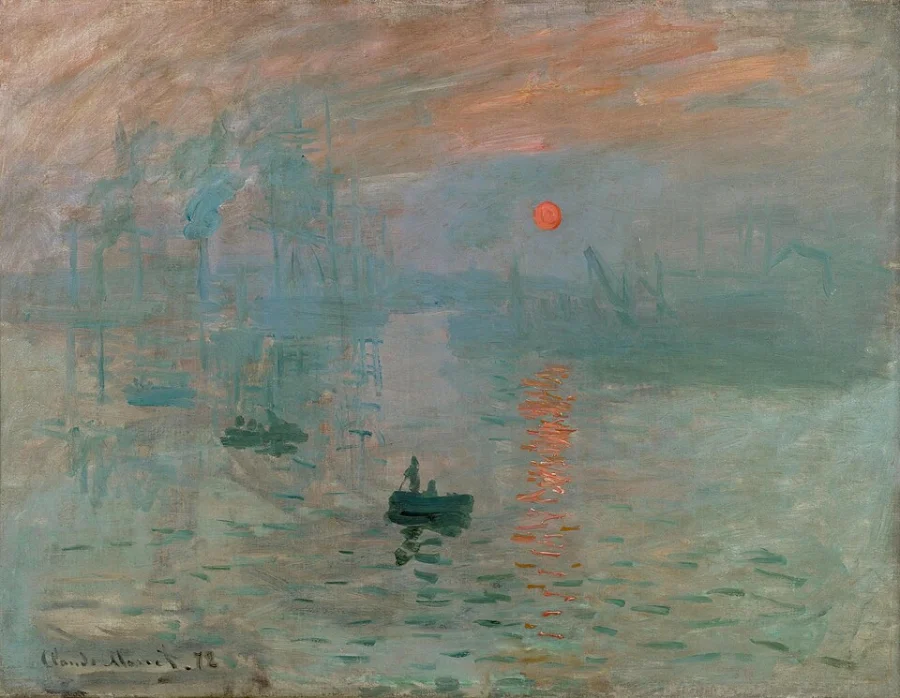
The paint goes on in short, free marks. Step back and the separate patches join up into water, grass, cloth or fur.
Light is the main character
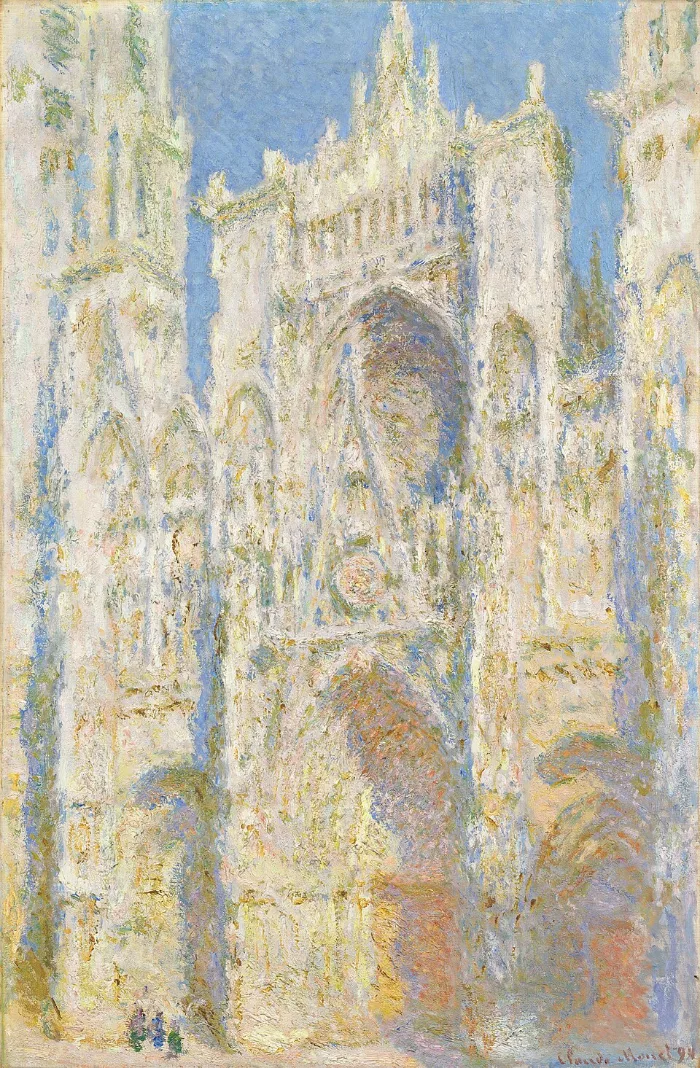
The object may be perfectly ordinary, but its colour changes with the hour, the weather and whatever is reflecting nearby. A white wall turns pink at sunset and blue in shadow.
Colour instead of black shadow
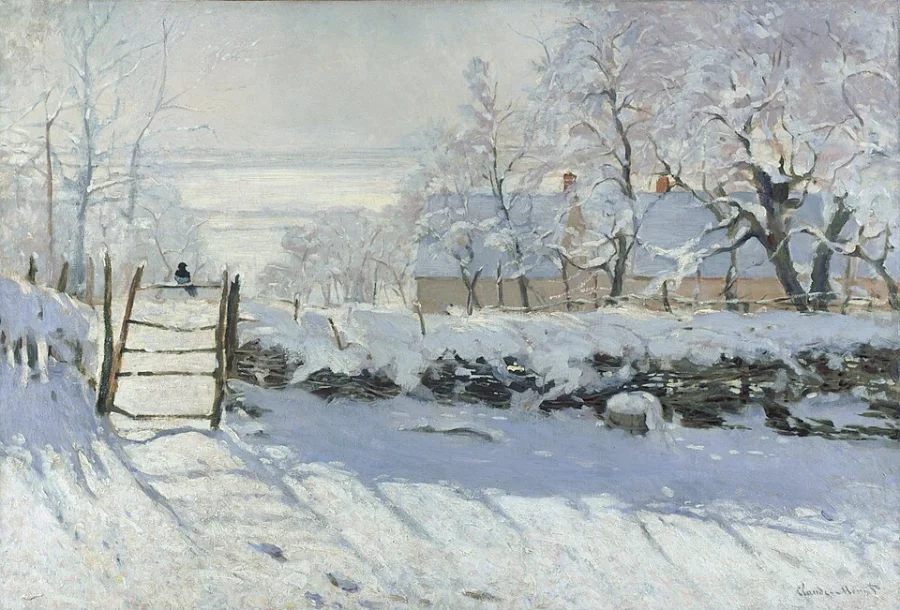
Impressionists often built shadows out of blues, greens and violets. Opposite colours — blue beside orange, say — were placed together so that both look brighter.
Ordinary modern life
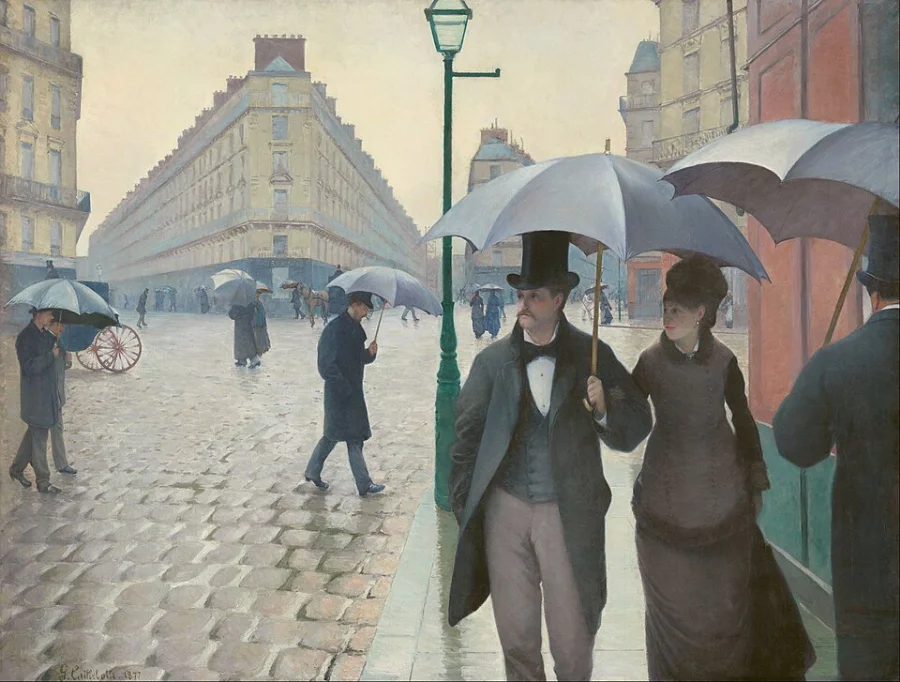
Cafés, railway stations, gardens, walks, theatres, racecourses, city streets. The great subject might be happening at the next table.
A moment, caught as if by accident
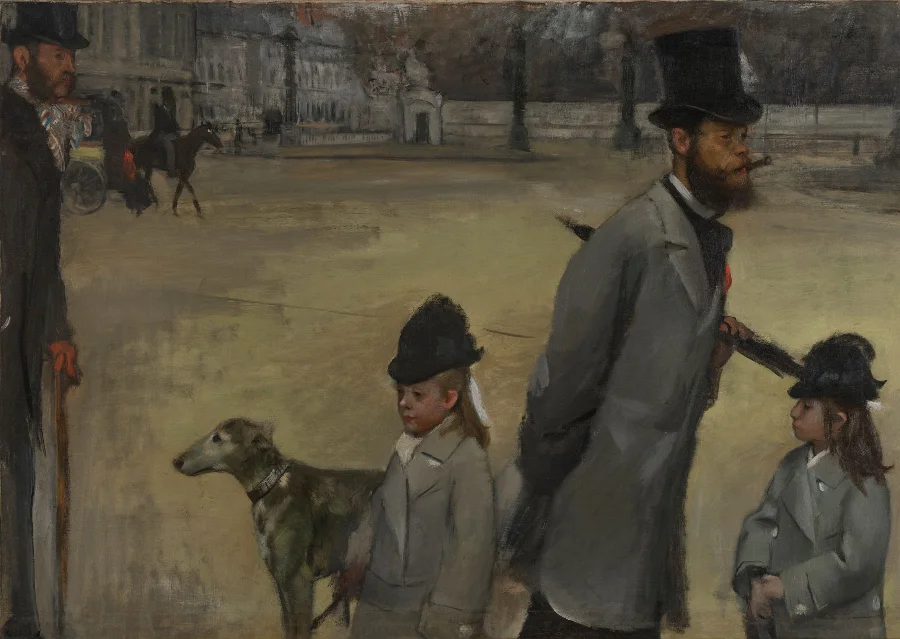
An odd angle, or a figure cut off by the edge, makes it feel like a snapshot. Photography and Japanese woodblock prints both pushed them this way.
Looking closely at our capybara
Everything on that list is somewhere in our painting. Press the numbers to find them.
Pick a number
Each marker points at one thing this movement cared about.
Observation. The calmest thing in the picture is the capybara. The busiest thing is the light.
Five painters, five ways of seeing
Claude Monet — one motif, many moods
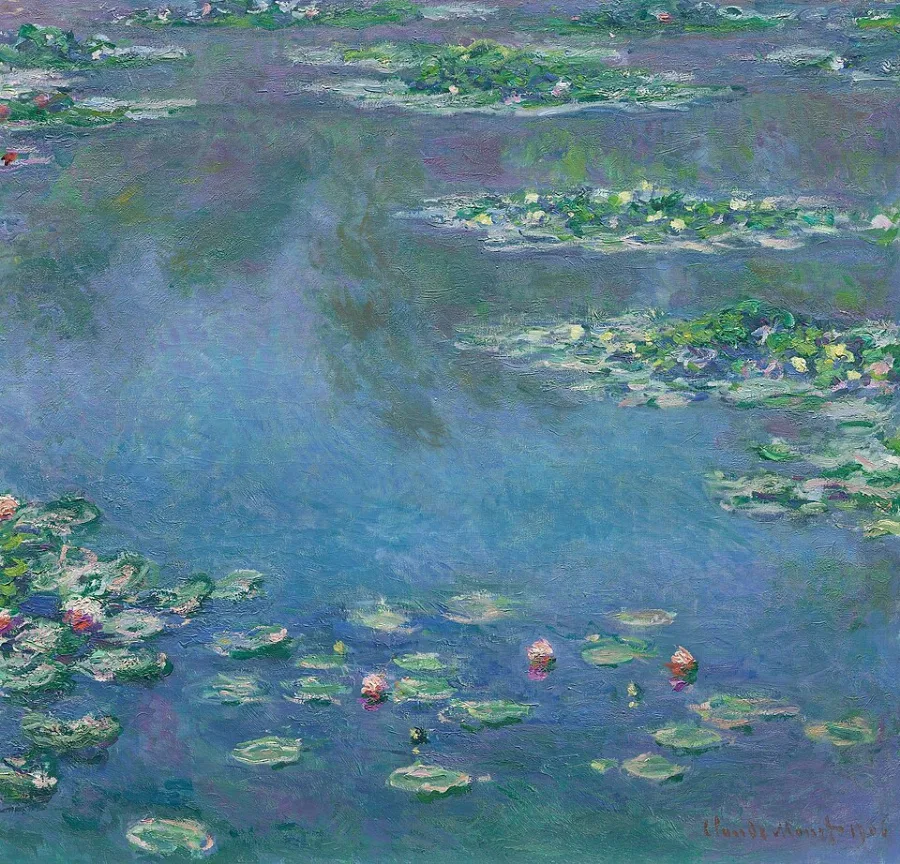
Monet went back to the same view again and again: haystacks, the front of Rouen Cathedral, a bridge, water lilies. His series show that the thing stays the same while the painting changes with the light.
sits in one pond at morning, noon and evening — and is in a different painting each time.
Berthe Morisot — speed and air
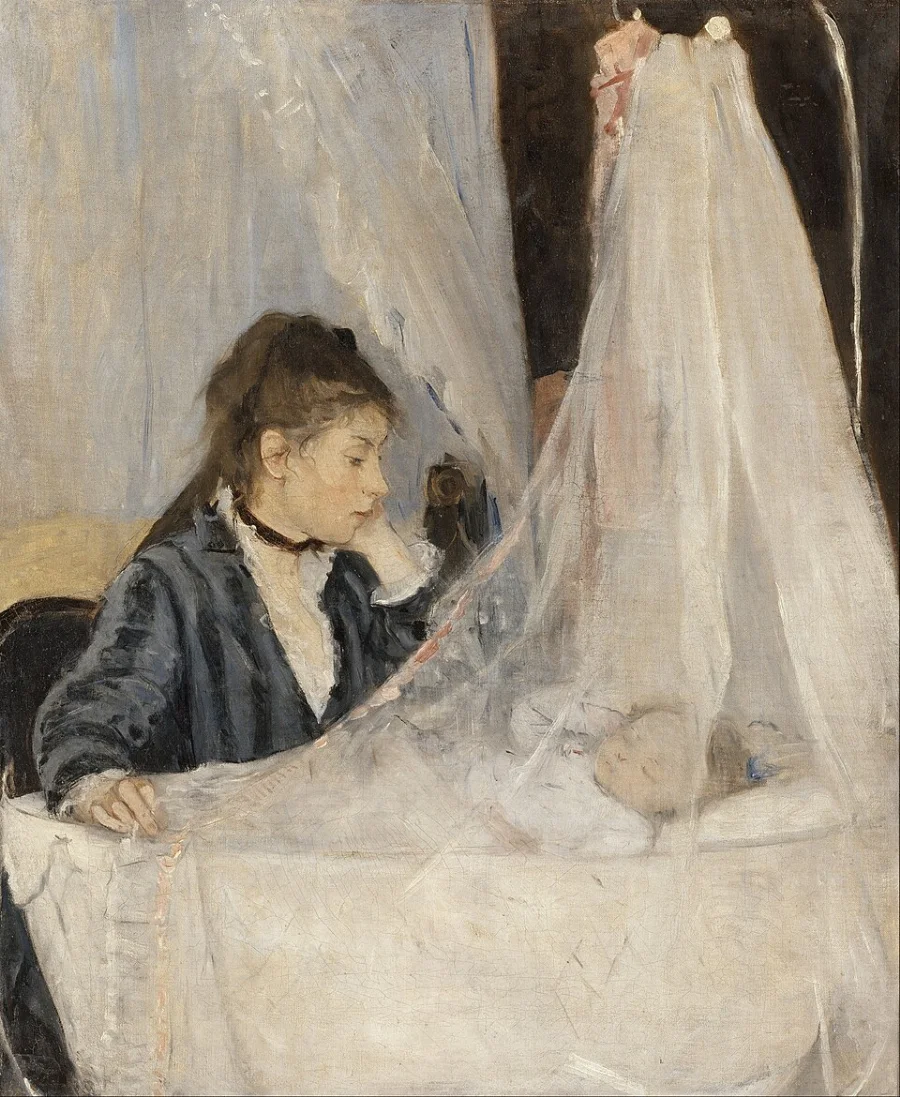
Morisot painted modern life with light, rapid strokes. Her bare or nearly transparent patches of canvas do not look empty; they let the picture breathe.
arrives in a few confident movements of the brush, as if she has only just walked into the frame.
Edgar Degas — movement and an odd crop
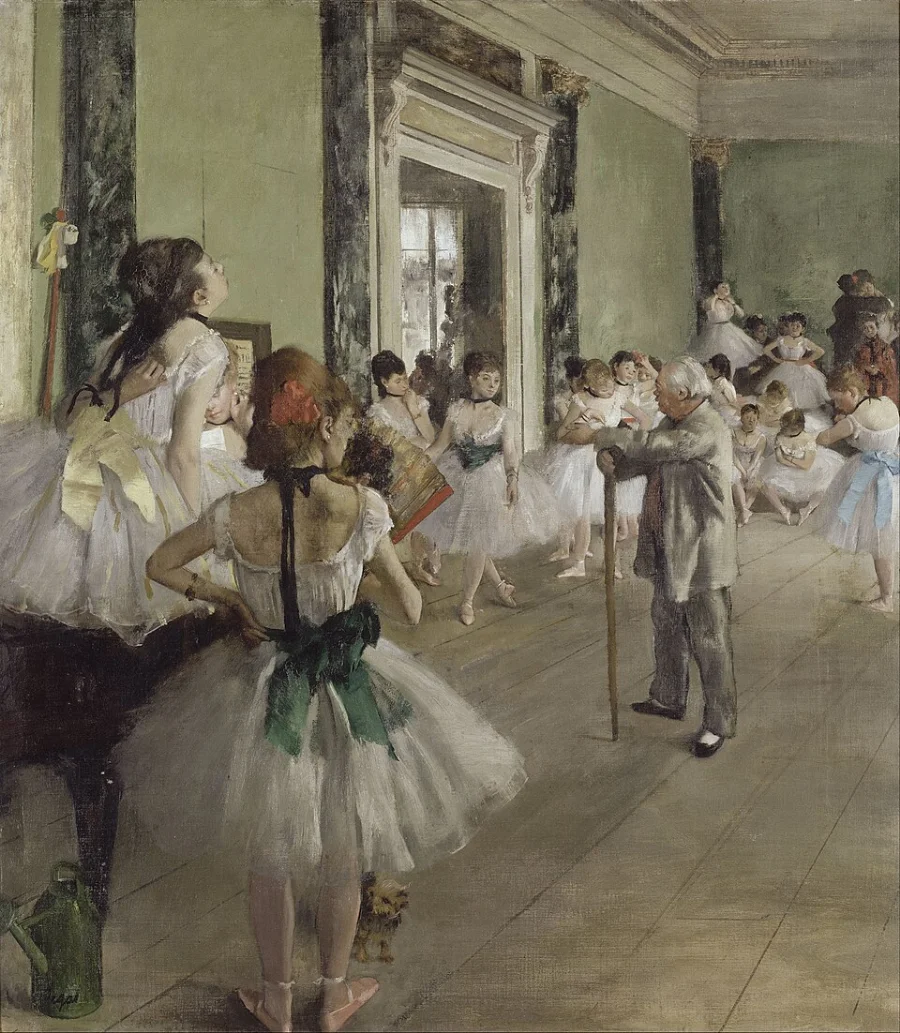
Degas was drawn to dancers, racehorses and people at work. He often chose a high viewpoint, pushed figures to the edge and cut the composition off, as though a photographer had caught an action still going on.
is not posing; she has just flopped into the water and the ripples are already running off the edge of the screen.
Pierre-Auguste Renoir — people, warmth, shimmer
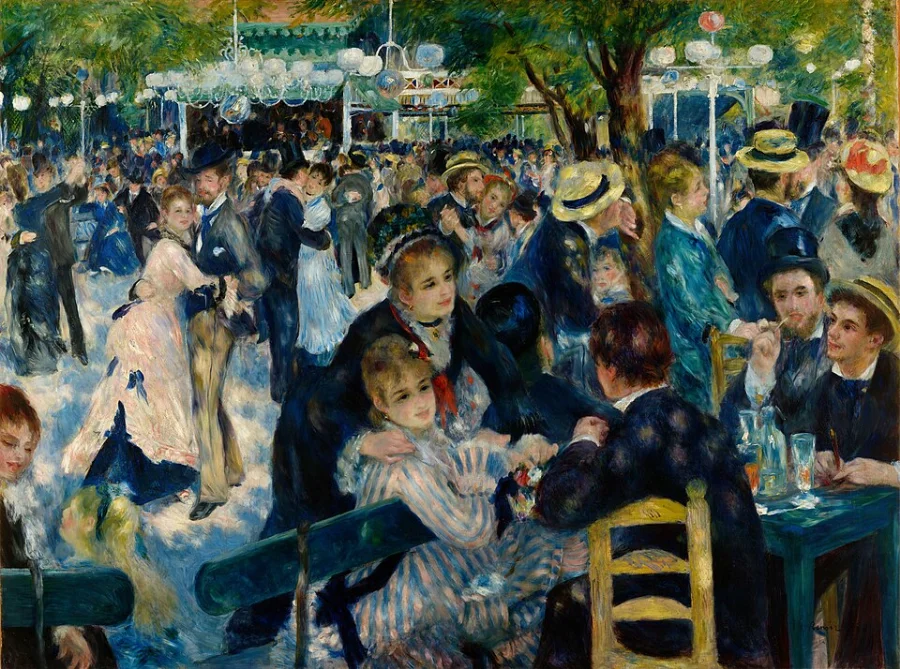
Renoir loved parties, portraits and sunlight coming through leaves. His colour makes you feel the warmth of skin, of cloth and of the air itself.
has come to the picnic and appears to know everybody there.
Camille Pissarro — town and country in motion
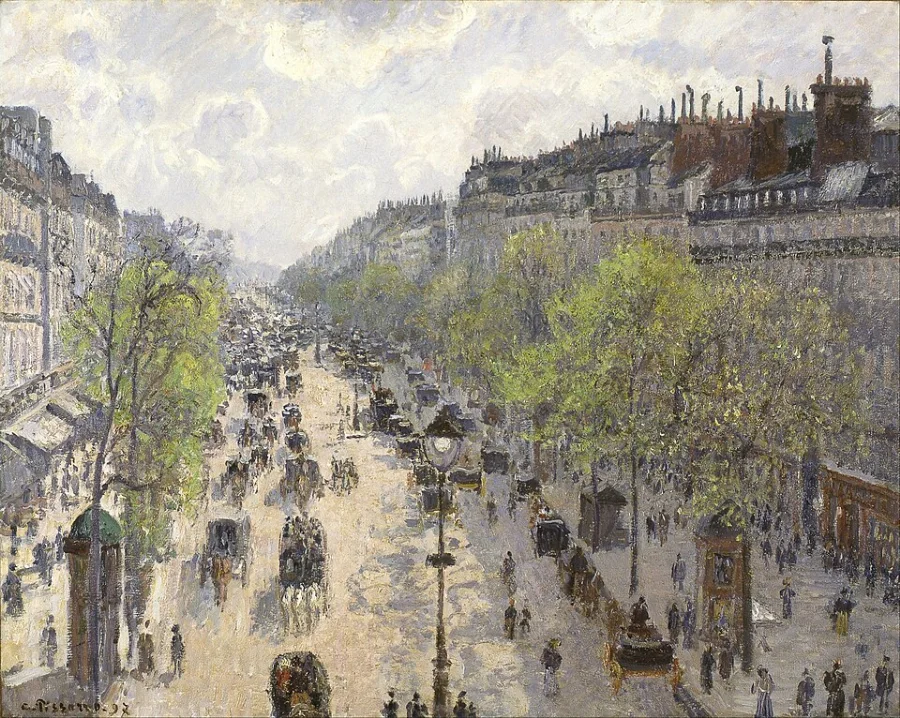
Pissarro painted country roads, fields and the changing streets of Paris. He mattered a great deal to the group: he was the only artist to show work in all eight of the Impressionist exhibitions.
studies a vegetable path and a busy boulevard with exactly the same attention.
They did not all do the same thing
Impressionism was never a set of strict rules. Monet often worked outdoors; Degas preferred the studio, the theatre and a carefully built composition. Some of them explored nature, others the city and the way people move through it. What they shared was the wish to see their own time freshly — but each one took a different route.
Worth knowing. En plein air is French for “in the open air”. Paint in portable metal tubes and folding easels made working outdoors far easier. Even so, a painting might be begun in a field and finished back in the studio.
The light lab
Two experiments. Neither needs paint — the first happens in your eye, and the second in your memory.
The observer's glossary
Creative workshop: one pond, three impressions
Paint the same capybara three times — morning, midday and evening.
Worth knowing. What you need: thick paper, gouache or watercolour, one wide brush and one thin one, a jar of water, a cloth. Working digitally? An opaque brush with smoothing turned off.
- Divide the sheet into three small rectangles.
- In each one, repeat the same simple silhouette of pond and capybara. Do not spend time on small details.
- Choose a different pair of main colours for each time of day.
- Paint in short, visible strokes. Do not rub everything smooth.
- Add coloured shadows and reflections. Keep black for the single darkest accent — or manage without it entirely.
Fact card. The Creative Corner rule: seven minutes per picture. What matters here is noticing and mood, not a tidy outline.
Afterwards, ask yourself: what changed more — the capybara, or the light around her?
Mini quiz
Five questions. The reason appears once you have chosen.
1. Why is the movement called Impressionism?
Louis Leroy meant “impression” as an insult about Monet's Impression, Sunrise. The painters kept the word.
2. What most helps create the feeling of changing light?
Light is carried by the relationship between colours, not by outlines.
3. Which of these painters is especially known for unusual cropping and scenes of dancers?
Degas cut his compositions like a photographer catching an action already under way.
4. Did all the Impressionists always paint outdoors?
Monet often worked outdoors; Degas preferred the studio and the theatre.
5. Why is the water in our painting made of several colours?
Water shows you everything around it. That is why it is almost never one colour.
What to keep
“You may not be quick enough to stop the light. But you can be quick enough to notice it.”
Next time you are outside, look at a shadow and ask what colour it actually is. Almost never black.