Learn art with a very calm capybara.
Short illustrated chapters on how art actually works — why a shadow is almost never black, why one painter kept painting the same pond, and what a brushstroke is for. Written for ages 8–14, and perfectly readable over somebody's shoulder.
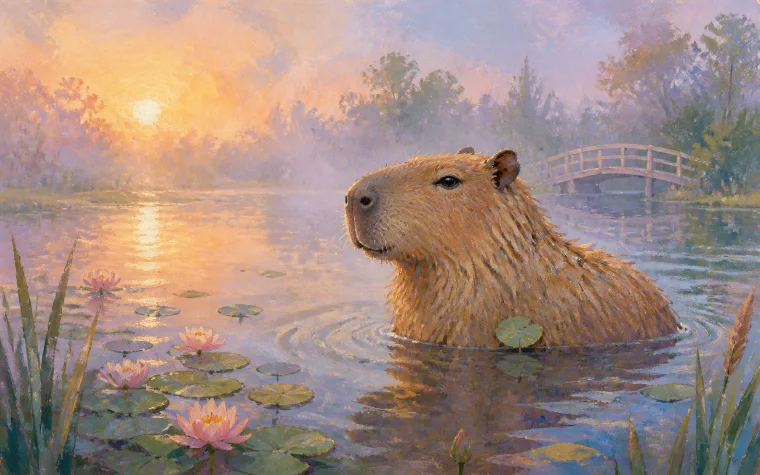
Impressionism
Paris, 1874. A word meant as an insult becomes the name of a movement — and one completely unbothered capybara sits in the middle of it.
Read the chapter →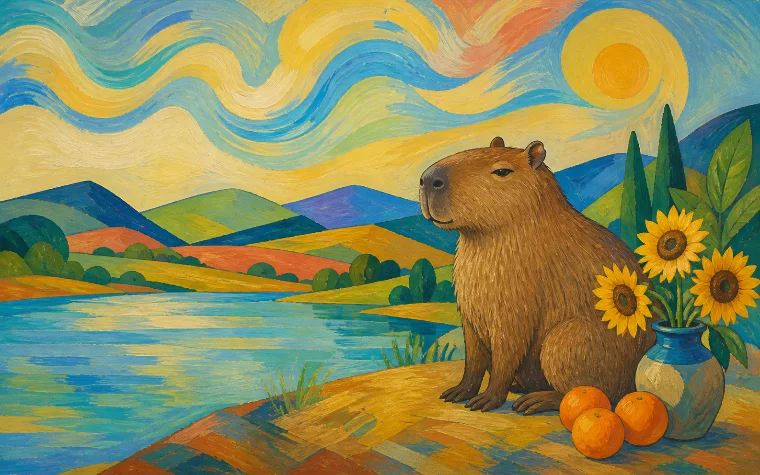
Post-Impressionism
Catching a moment of sunlight stopped being enough. Four painters took four different roads away from the same pond — and none of them agreed with the others.
Read the chapter →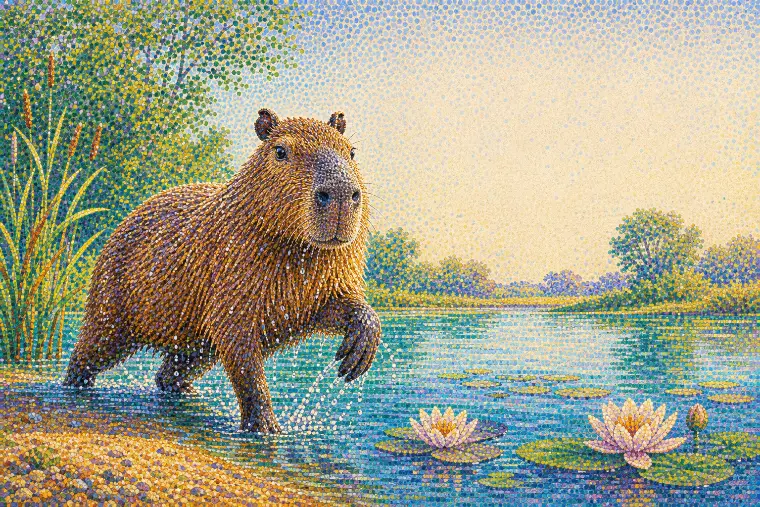
Pointillism
Up close it is thousands of separate coloured dots. Step back and it becomes wet fur, sunlit water, and a capybara who has just walked out of the river.
Read the chapter →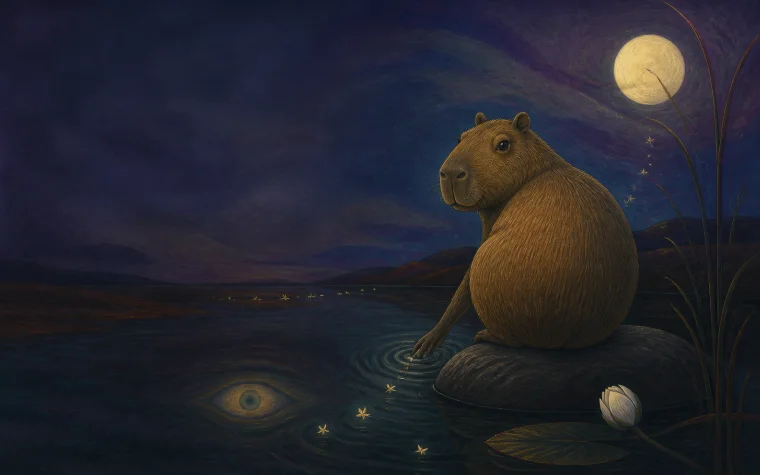
Symbolism
A quiet night. The capybara has looked back as though she heard not a sound but a memory. Everything here is real — and everything means something more.
Read the chapter →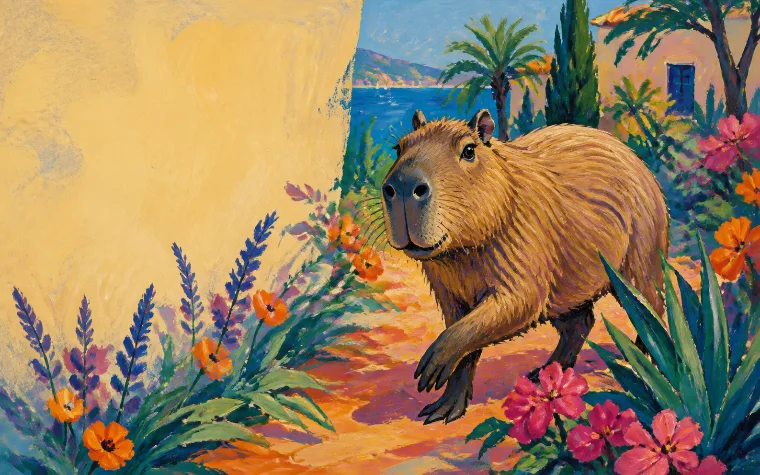
Fauvism
A critic called them wild beasts and meant it as an insult. They kept the name — and stopped asking nature's permission about what colour anything should be.
Read the chapter →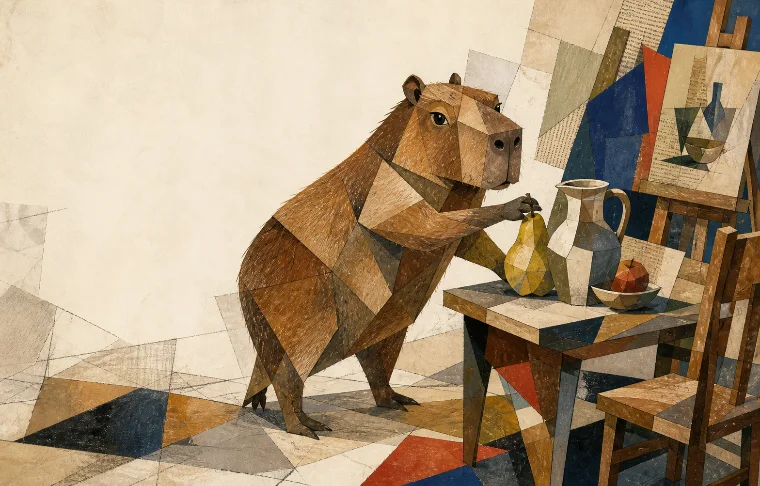
Cubism
What happens if a painter refuses to have one correct point of view? The studio comes apart, and the capybara is looking at the pear from two directions at once.
Read the chapter →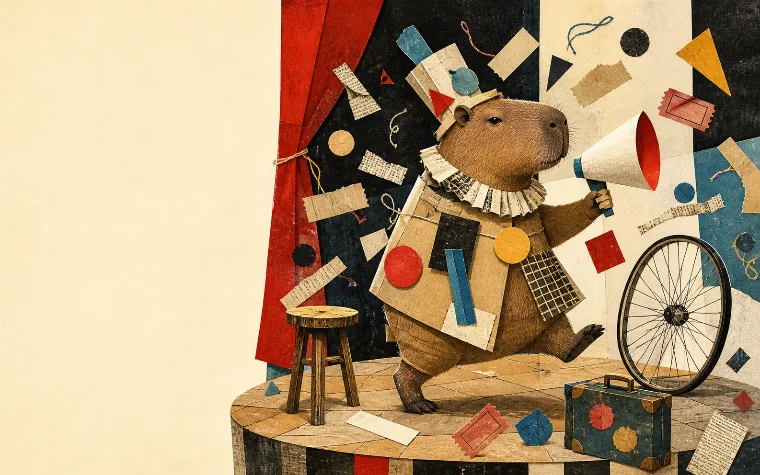
Dada
A capybara runs onto the stage in a cardboard costume, blows a paper megaphone and scatters newspaper behind her. She has broken nothing: the mess is the method.
Read the chapter →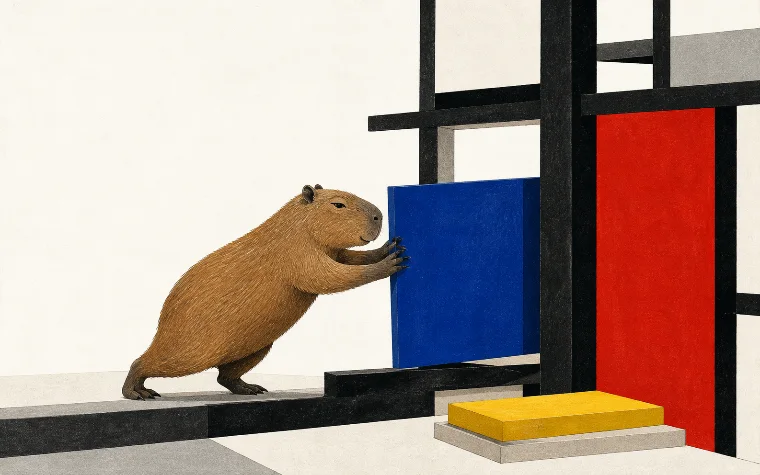
De Stijl
Our capybara has found the world in pieces: black beams crossing, coloured panels waiting for a place. She pushes the blue one until the whole thing holds.
Read the chapter →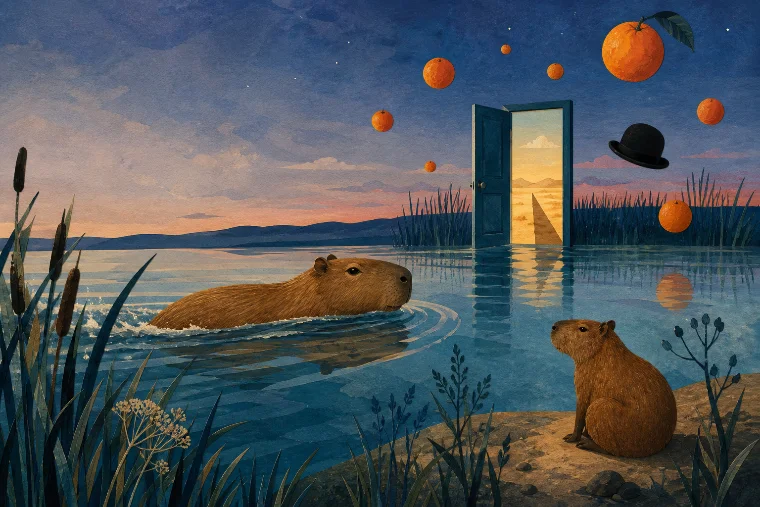
Surrealism
A capybara swims calmly across the lagoon while her reflection sits on the bank. A bowler hat floats above the reeds, and a door in the middle of the water opens onto a desert.
Read the chapter →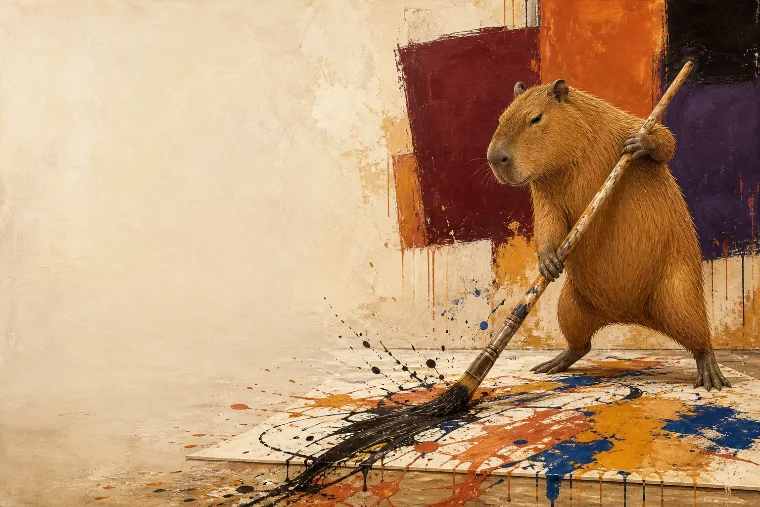
Abstract Expressionism
No subject, no story, no character. The event of the picture is the movement of the painter's arm — and a capybara with a very long brush.
Read the chapter →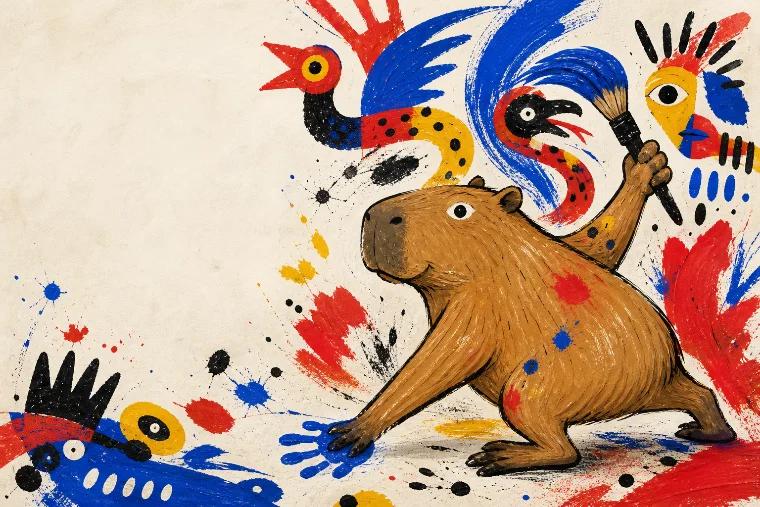
CoBrA
The group lasted barely three years and proved something anyway: art can be free, made together, and deliberately untamed.
Read the chapter →About the pictures
Every illustration in these chapters is painted for us — a capybara in the style of the movement being explained, never a copy of a real painting. When we talk about a famous work, we describe it and link to the museum that owns it, so you can look at the real thing where it lives.