Post-Impressionism
Some painters decided that catching a moment of sunlight was not enough. They wanted to build a picture like a house, to send the sky spinning like a whirlwind, to turn colour into feeling — and even to take light apart into separate dots.
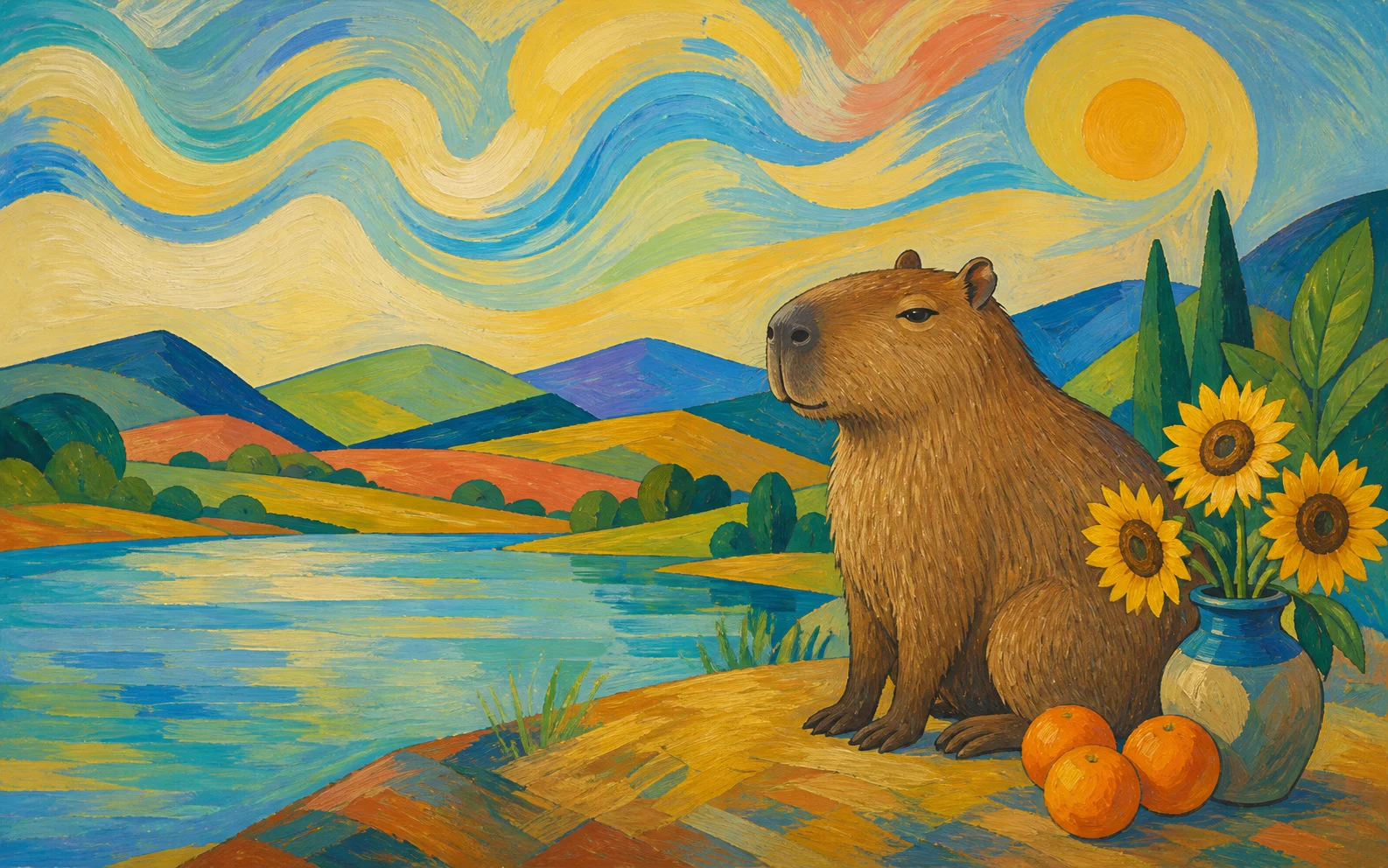
“Same pond as last time. I have not moved. Everything else has.”
After the impression
Picture a painter walking to the water's edge with a box of colours and quickly setting down the way the sun shivers on the surface. That is Impressionism: fleeting light, air, a passing impression.
For the next generation, one impression was not enough.
Where is the solid form? asked Paul Cézanne. Where is my feeling? answered Vincent van Gogh. Must colour be believable at all? wondered Paul Gauguin. What if a picture were built from thousands of dots? calculated Georges Seurat.
They were not a team. They signed no shared rules, worked very differently and sometimes disagreed. Only later did anyone gather them under one convenient word: the Post-Impressionists — the painters who came after Impressionism.
The same pond. A different inner reality.
The name came later
Post-Impressionism is usually placed roughly between 1886 and 1905. The first date is the last Impressionist exhibition; by the early 1900s new movements were already replacing one another quickly.
The name itself became widely known thanks to the British painter and critic Roger Fry. In 1910 he put on a London exhibition of late nineteenth-century French artists and called it Manet and the Post-Impressionists. So the paintings came first, and the label for them arrived a good twenty years afterwards.
Fact card. This matters: Post-Impressionism is not one recognisable handwriting. It is a crossroads, with several roads leading away from it towards the art of the twentieth century.
Four roads from one pond
Build it — Paul Cézanne
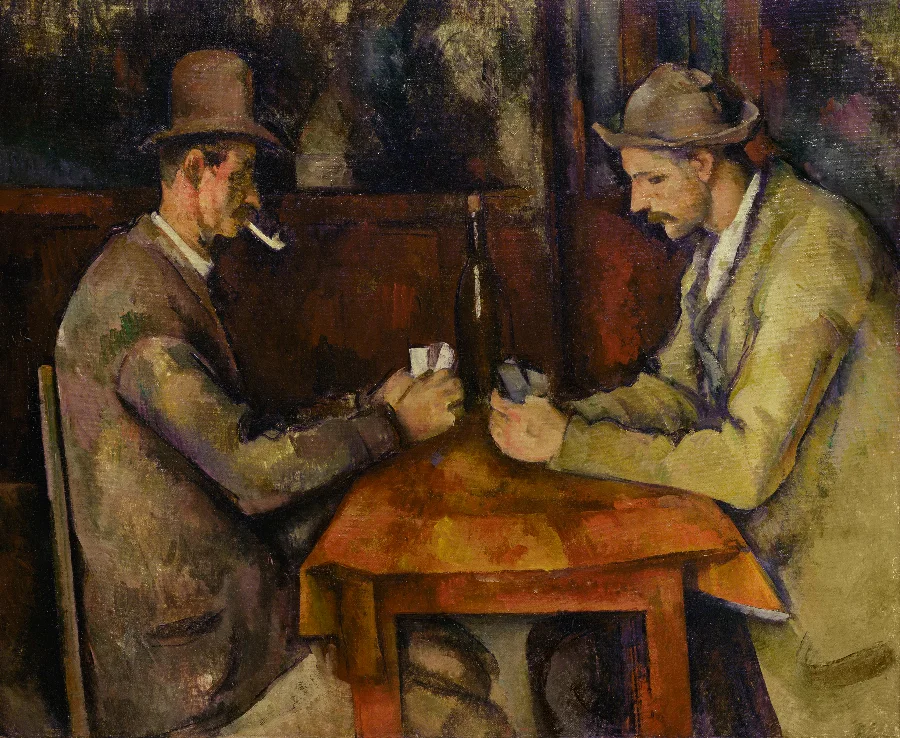
Cézanne looked hard at nature but did not want to copy its surface. In an apple he saw volume; in a mountain, a sturdy construction; in a landscape, the relationship between uprights, horizontals and slopes. His brushmarks lay down like coloured bricks.
Switch on “Cézanne's eye” and the capybara's round back becomes a large oval, her muzzle a long block, the oranges spheres, the hills simple planes of colour.
Feel it — Vincent van Gogh
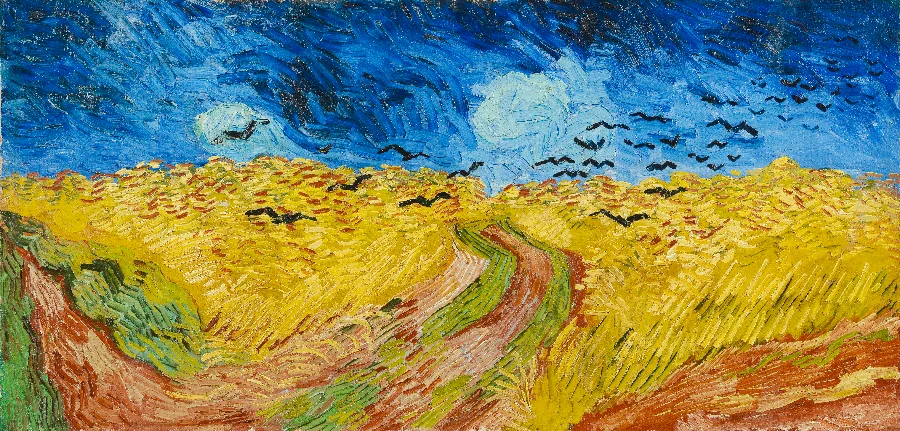
For Van Gogh, line and colour could speak louder than an exact likeness. His brushmarks do not hide: they circle, push, repeat and steer your eye. A sky can churn, a tree can strain, a field can pulse.
Mean it — Paul Gauguin
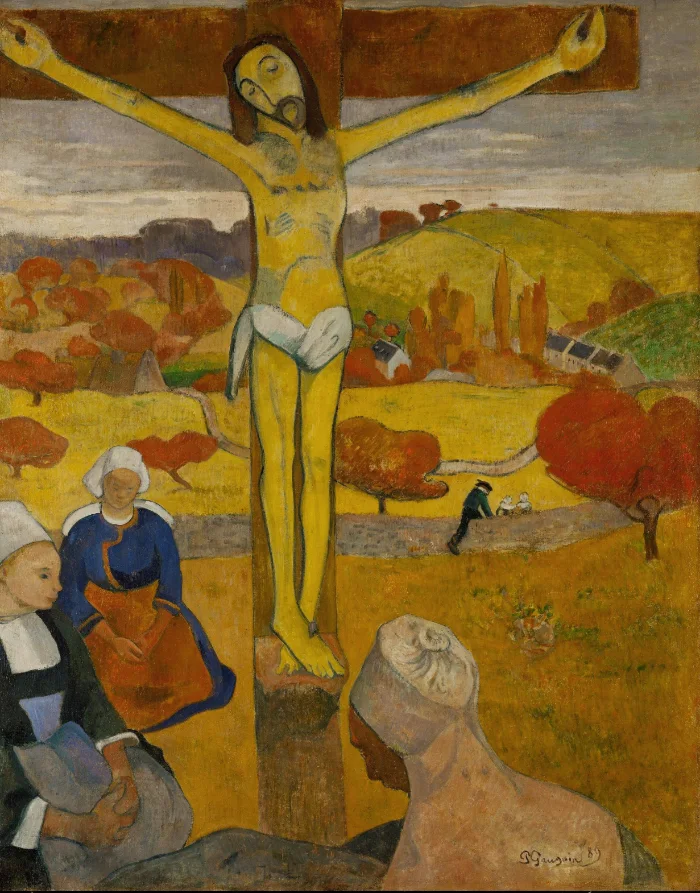
Gauguin simplified outlines, built pictures from large areas of colour and changed natural colours freely. Space grew flatter, and objects could carry a meaning beyond themselves.
Work it out — Georges Seurat
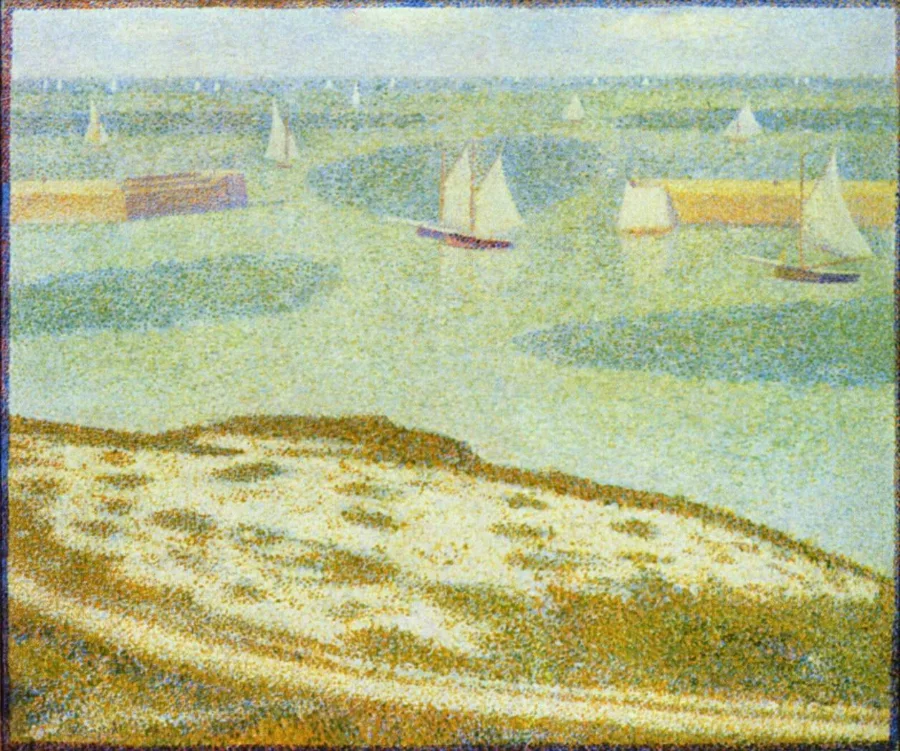
Seurat studied how colours placed side by side behave in our eyes. Instead of mixing everything on the palette he laid down many small separate marks that join up at a distance. That method is usually called divisionism or pointillism, and the movement Neo-Impressionism — worth naming precisely, even when he is discussed alongside the other three.
Cézanne built, Van Gogh felt, Gauguin meant, Seurat calculated. Four roads, one starting point.
How to spot a Post-Impressionist work
Colour carries the idea
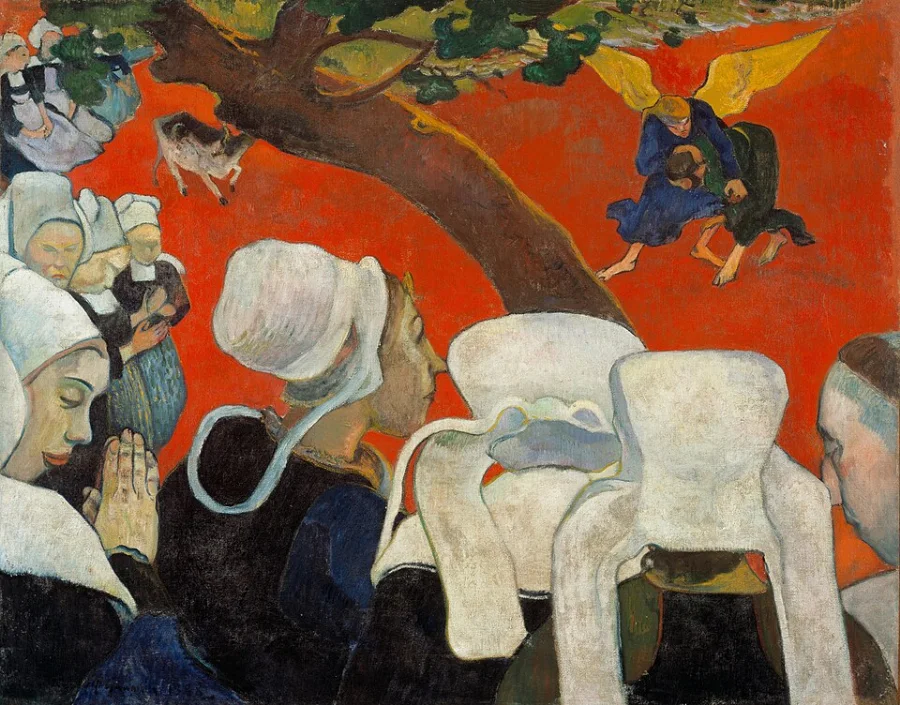
Grass may turn blue, a shadow violet, a face green. Colour is chosen for mood, contrast or meaning as much as for observation.
The brushmark stays visible
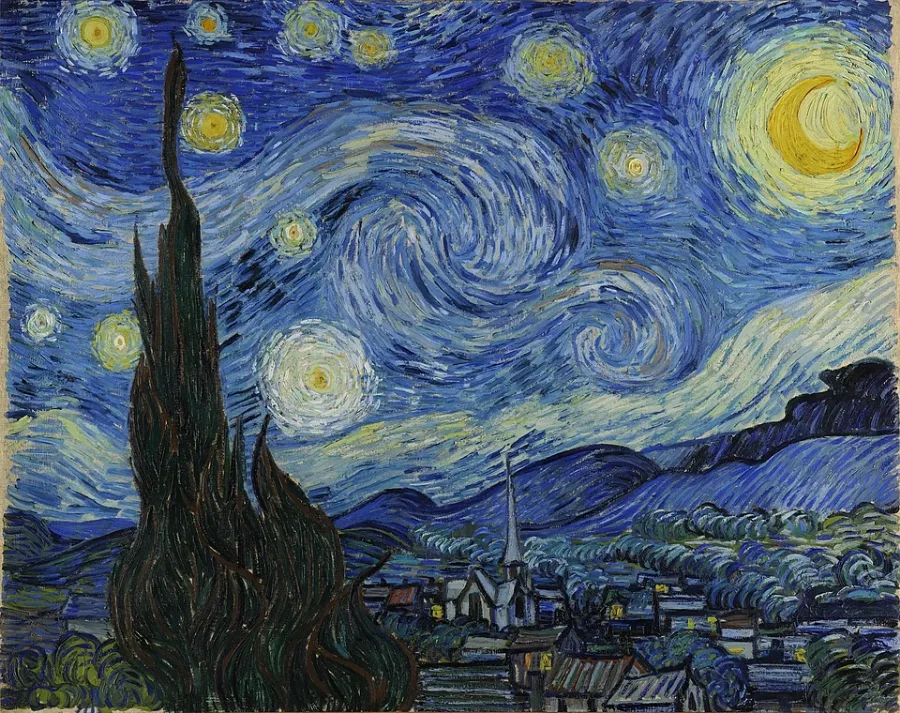
You are allowed to see the painter's hand: a short stroke, a long arc, a dense patch, a dot. How the paint went on becomes part of what the picture means.
Form is simplified, or constructed
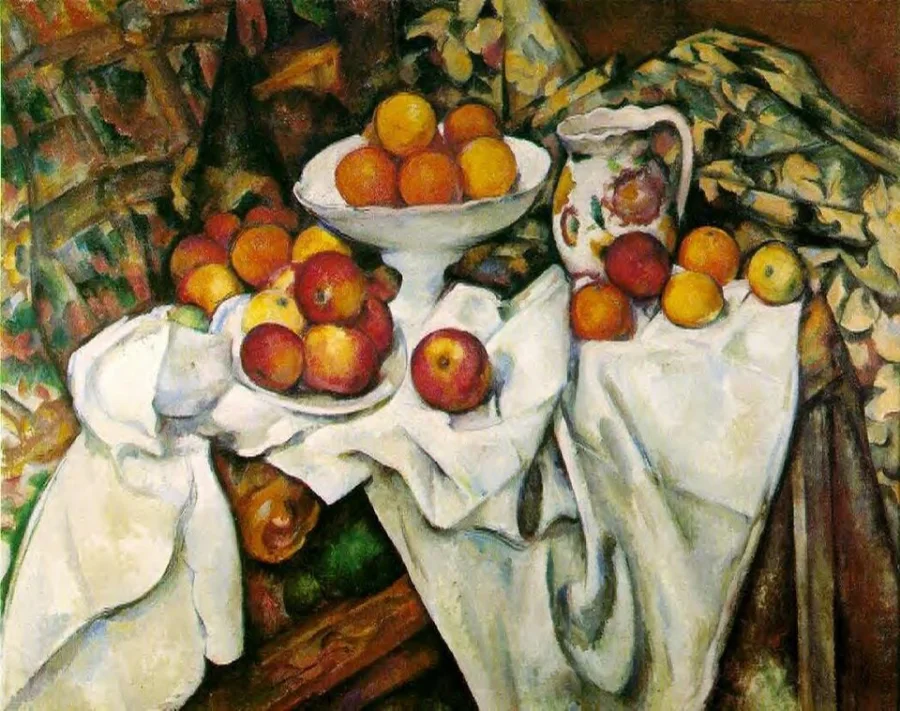
Objects may become almost geometric, their outlines stronger, the depth shallower. Reality is the material, not the rule.
The picture shows an inner view
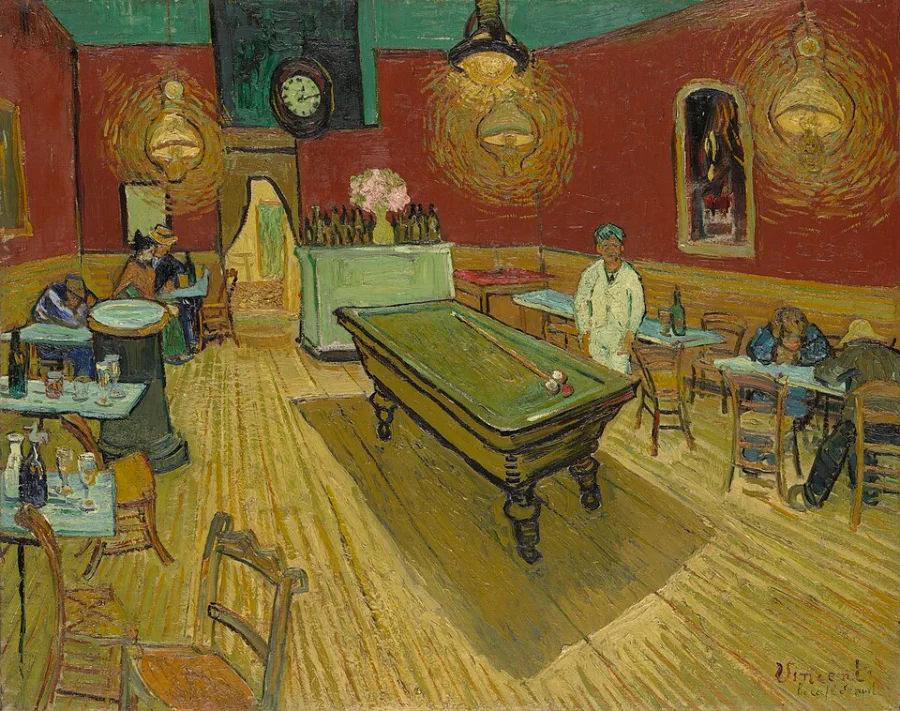
What matters is not only what is in front of us but what it means to the painter. So a landscape can carry worry, joy, loneliness or steadiness.
Every painter invents their own system
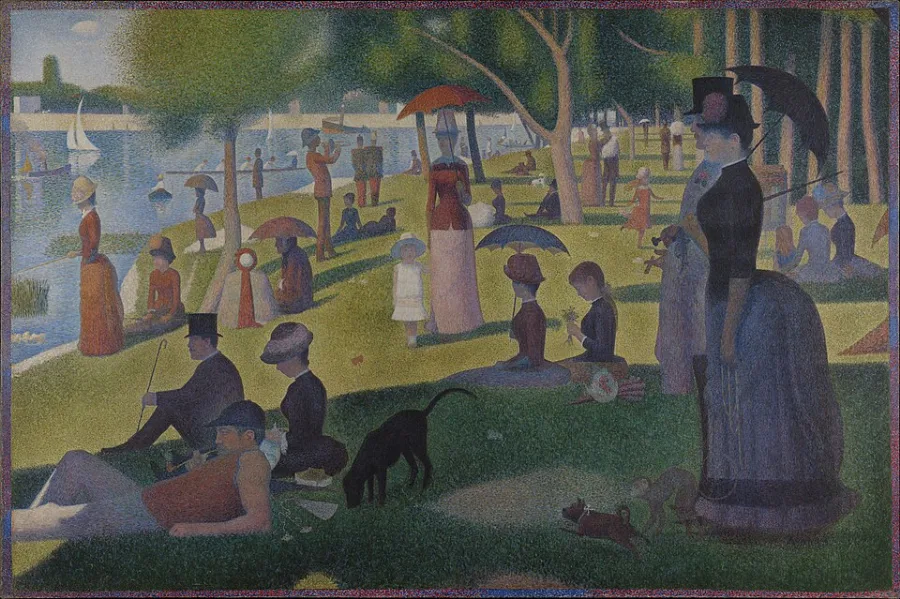
Which is why you recognise Post-Impressionism not by one trick, but by the bold step from a quick impression to a personal language.
Looking closely at our capybara
Our painting copies no historical picture. It brings several ideas of the period together in one new scene. Press the numbers.
Pick a number
Each marker points at one thing this movement cared about.
Observation. The painter did not take nature apart. He found a new order for it.
Four painters, four characters
Paul Cézanne, 1839–1906
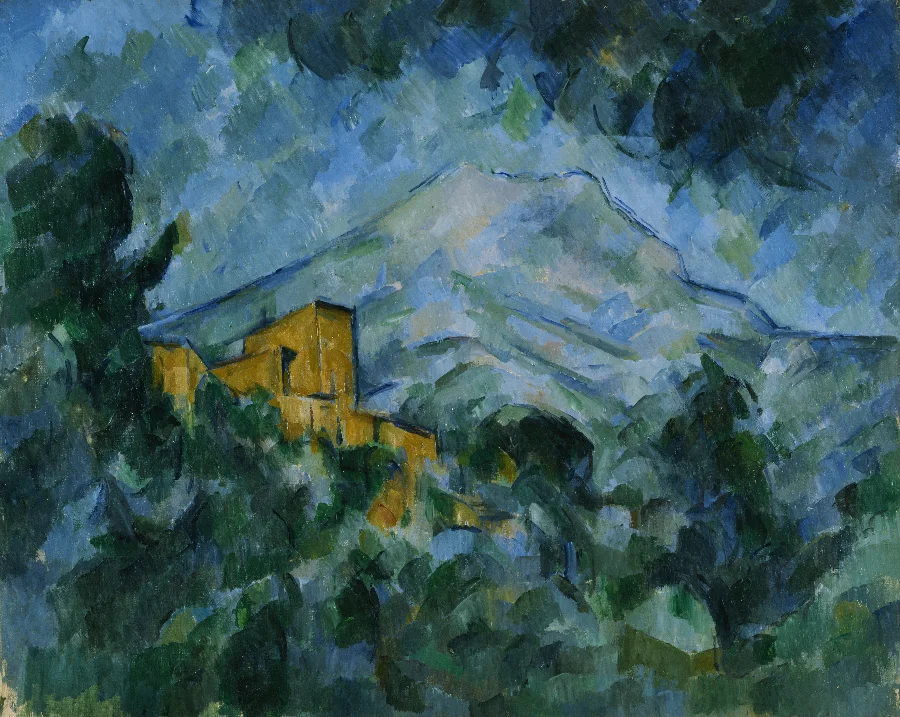
Painted the same subjects again and again: the mountain of Sainte-Victoire, bathers, still lifes. He wanted to know how colour makes volume and how the parts of a picture hold together. His searching later helped other painters arrive at Cubism.
would build her out of one oval, two cylinders and a long rectangle, and call it finished.
Vincent van Gogh, 1853–1890
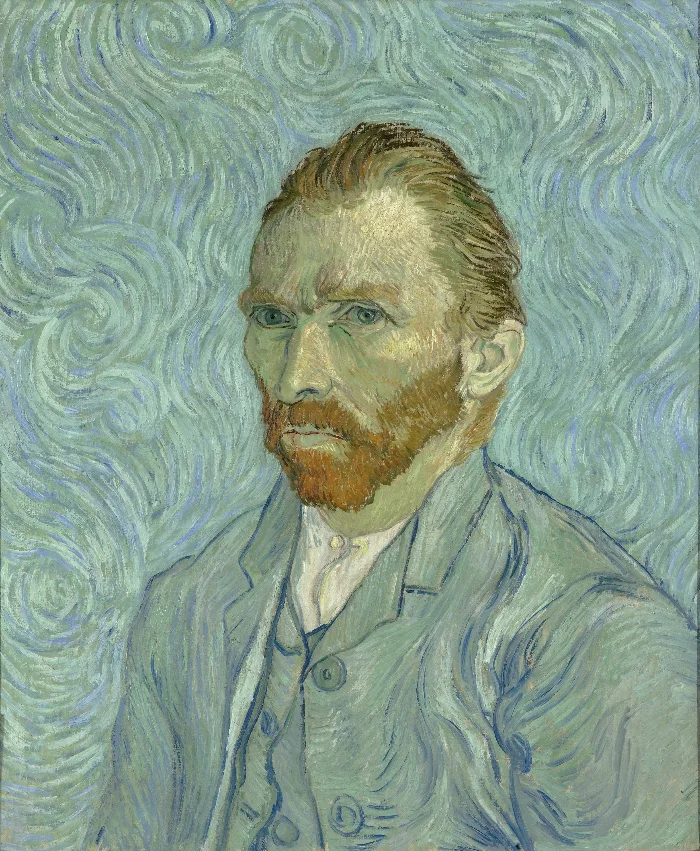
In a very short working life he made an intensely personal language of line and colour. He worked from life but transformed what he saw through the rhythm of his brush. His painting is a reminder that intensity is not the same as carelessness: careful looking sits behind every stroke.
sits perfectly still while the entire sky has an opinion about it.
Paul Gauguin, 1848–1903
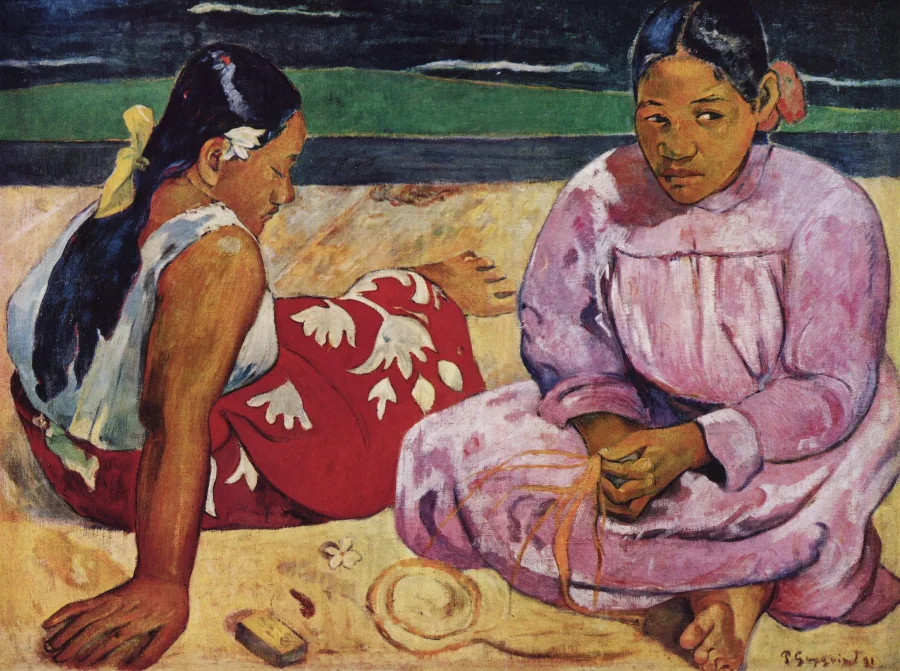
Used large flat areas of colour, simplified silhouettes and symbolic scenes. He wanted to escape European city life and looked for inspiration in other cultures — but he did so through the colonial gaze of his time, which is why his innovations are studied today alongside a critical conversation about how he portrayed people and places. There is more about that on the next screen.
would be painted violet, because violet is how the afternoon felt.
Georges Seurat, 1859–1891
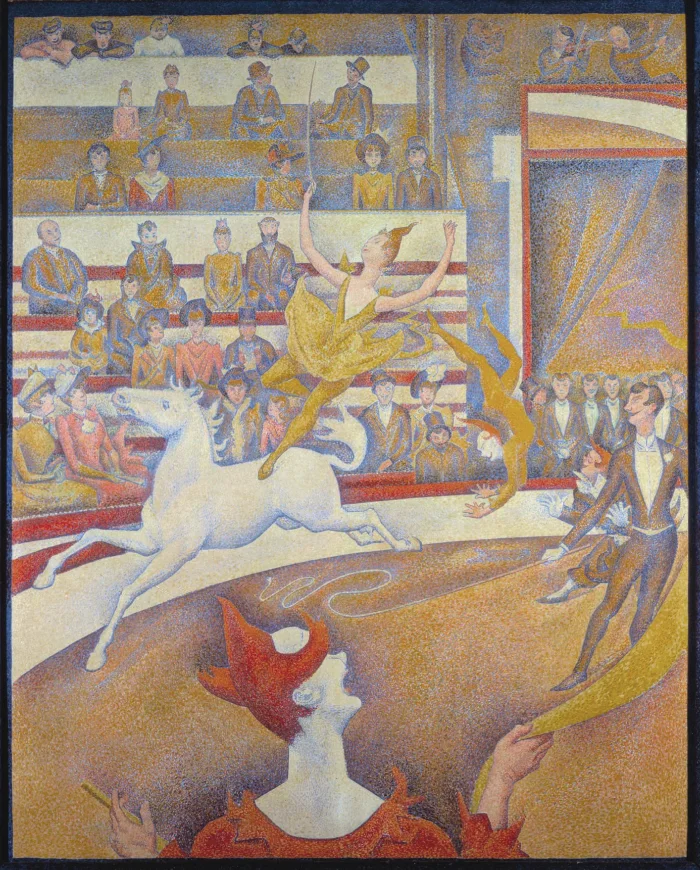
Planned his compositions almost like a researcher. Separate marks of colour in his work join at a distance into a more complex impression. The slowness of the method makes a strange, lovely contrast with his subjects: walks, water, modern city life.
would take four months, and she would wait.
Art and a difficult history
The history of art is not a competition of faultless heroes. A person can invent something genuinely important and, at the same time, do things we rightly criticise today.
That is especially true of Gauguin. His scenes from French Polynesia were long presented as an escape to an “untouched paradise”. That story hid the fact of French colonial power, and turned real people into exotic images for a European viewer. His life also included relationships with very young girls that were wrong then and are wrong now.
At Creative Corner we keep three questions apart:
- What did this painter do that was new with form and colour?
- What story were they telling — and from whose point of view?
- Whose voices are missing from that story?
Worth knowing. This is why our capybara sits in a South American landscape as an animal at home in it, not as a costume. The plants, the water and the earth are a real place, not scenery for somebody else's daydream.
You can admire what someone discovered and still be honest about what they did. Both things can be true, and saying so is not disloyal to either.
The colour and brushstroke lab
Four things to try with real paint. No screen needed — the whole point is your own hand.
Colour need not obey
Draw one plain capybara shape three times and colour each with a different set: observed (brown, ochre, green, blue), joyful (lemon, turquoise, coral, pink), quiet (indigo, lilac, grey-green, sand). The shapes are identical. Ask yourself whether the story changed.
One gesture, four moods
Draw a single line across the page, four times: steady, broken, spiralling, dotted. Now decide what each line has become — water, grass, cloud, path. The brushmark is not decoration; it is an action.
The observer's glossary
Texture
The visible or touchable surface of a work. In painting, the way the paint was put on makes it.
Subjective colour
Colour chosen for a feeling or an intention, rather than to match what was in front of the painter.
Creative workshop: four states of one capybara
Worth knowing. What you need: a sheet divided into four, gouache or felt pens, a pencil, and cotton buds if you have them.
- Draw one simple capybara silhouette and repeat it four times.
- In the first, build the scene from flat geometric shapes.
- In the second, give it a feeling through the direction of your lines.
- In the third, invent a symbolic colour and add two objects that mean something.
- In the fourth, make the colour out of dots, without blending neighbours together.
- Give each one a two-word title: Quiet Bank, Wind Inside, Orange Waiting, Dotted Noon.
Fact card. Do not copy a particular painting. The task is to try four ways of thinking in pictures, not to reproduce one.
Afterwards: which version carries the form best? In which did colour become the storyteller? Where did your hand move most freely? And which one surprised you?
What to keep
“You walked four roads and came back to the same pond with new eyes. The capybara says nothing, approvingly.”
1. Is Post-Impressionism a single style with shared rules?
The painters came first; Roger Fry gave them the shared label in 1910.
2. Who was especially interested in the solid construction of a picture?
Cézanne looked for the structure under the surface — volume, planes, how parts hold together.
3. What can subjective colour do?
Colour stopped being a report on what was there and became a choice.
4. Why is Seurat usually named separately?
Divisionism was a method with a theory behind it, not a personal handwriting.
5. What happens to separate dots of colour at a distance?
Your eye does the mixing — which is the next chapter.
6. How should we study a painter with a difficult history?
Keeping the two apart is what lets you be honest about each.