Symbolism
A quiet night. The capybara has looked back, as though she heard not a sound but a memory of one. A strange reflection glimmers in the water, a closed flower waits for morning, and a trail of little golden lights leads somewhere nobody has named. Everything here is real — and at the same time stands for something more.
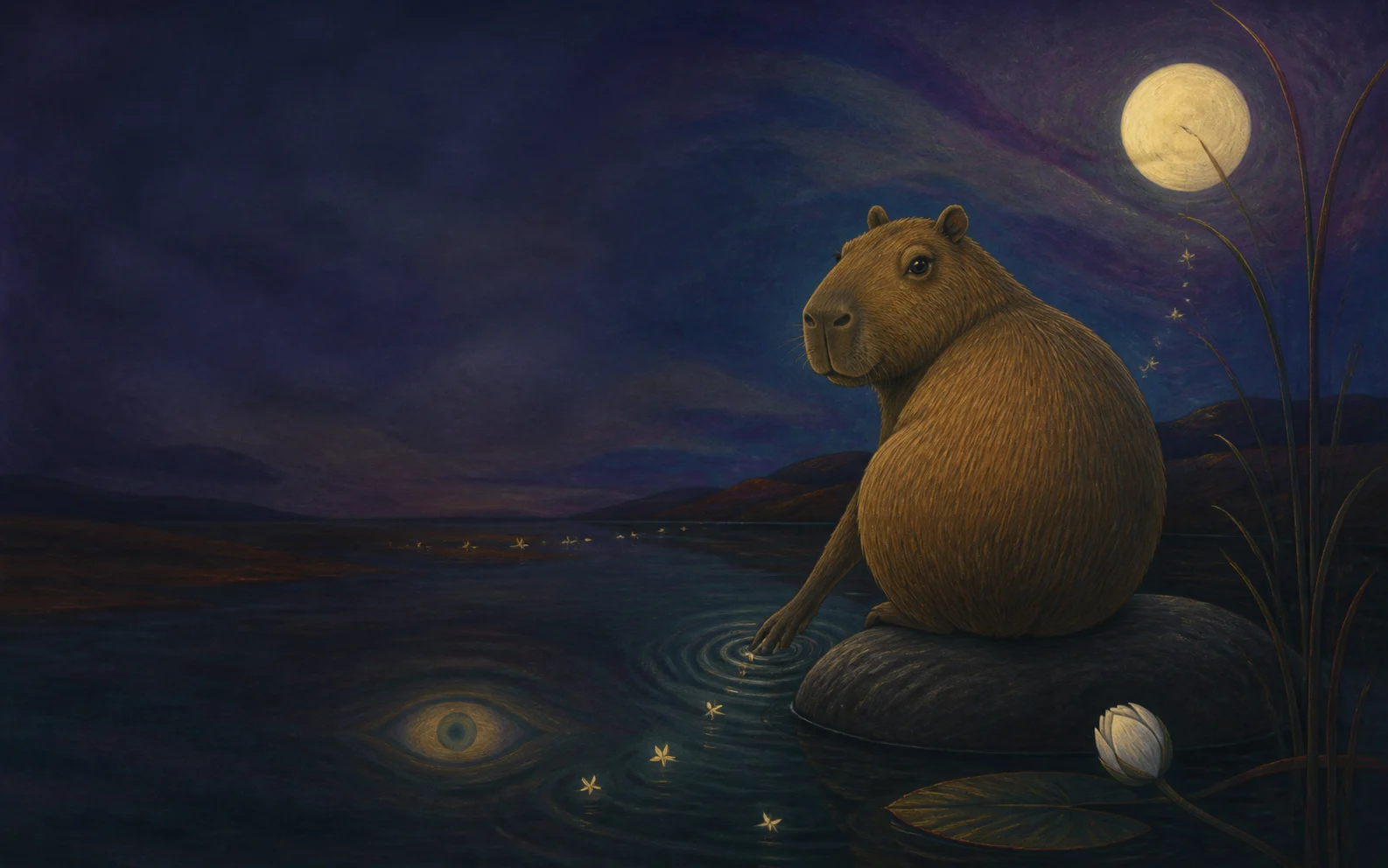
“I heard something. I am fairly sure it was not outside.”
What Symbolism is
Symbolism began in France at the end of the nineteenth century and spread across Europe and beyond. It is not one strict style with a set of rules but a wide circle of painters, writers and ideas, joined by a shared distrust of the notion that art should only copy the outside world truthfully.
An Impressionist might ask: what does the light look like this second?
A Symbolist asked something else: what does this light make me feel?
They turned to dreams, myths, legends, religion, music, memory and unease, and used expressive colour, strange lines and unlikely combinations of objects to give the invisible a shape.
Worth knowing. A symbol is not a riddle with one right answer. The moon does not always mean the same thing, and water has no single dictionary meaning. Sense comes out of the picture, the mood, the culture around it and whatever the viewer brings.
Why painters turned away from the visible world
The end of the nineteenth century was a time of fast change: cities growing, industry and science advancing, ordinary life rearranging itself. Some painters were thrilled by all this. Others felt that reason and material progress did not explain everything a person experiences.
The Symbolists looked for another road. Instead of watching only the outside, they turned inward — to fears, wishes, spiritual feeling, imagination. What mattered was not the object itself but the mark the object leaves in the mind.
Our capybara has turned away from you too. She is not posing and not handing you an answer. She is listening to the water, and inviting you to do the same.
How a symbol works
The same image can be read on three levels at once.
What it is doing in this particular scene
Our flower is closed at night. It might speak of sleep, of waiting, of a possibility still folded up — or of a thought that is not ready yet.
Fact card. That third reading is ours, made for this chapter. It is not a universal translation. Another viewer has every right to see loneliness in the same flower, or protection, or the beginning of a day.
Looking closely at our capybara
Every meaning below belongs to this scene, not to symbols in general. Press the numbers.
Pick a number
Each marker points at one thing this movement cared about.
Observation. The border between reflection and real thing has almost disappeared. That is the logic of a dream: familiar things stay recognisable, but the connections between them go strange.
The language the Symbolists used
Colour as feeling
Colour need not be believable, only emotionally exact. Violet makes a night thoughtful, cold blue makes it distant, gold makes it inviting and almost sacred.
Line as mood
A flowing line calms; a broken one unsettles; a repeating one creates the feeling of a ritual, or of a thought you cannot put down.
A dream instead of a story
A Symbolist scene need not have a clear before and after. It can look like a dream that has stopped, which the viewer then continues alone.
Painters, and the many faces of Symbolism
Gustave Moreau
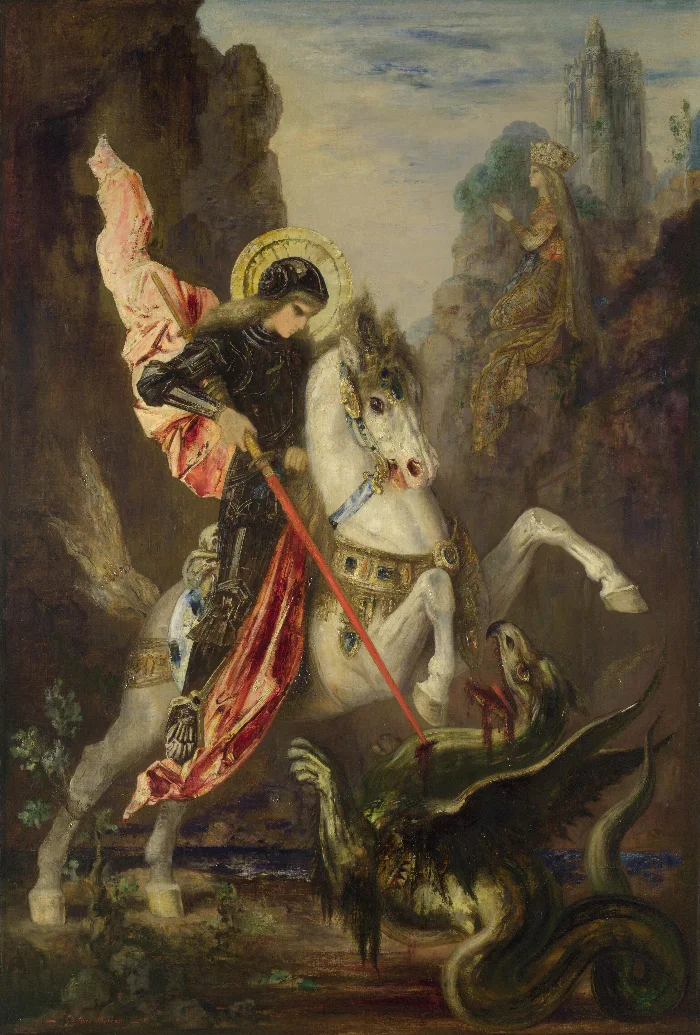
Built dense, detailed scenes from myth and the Bible. His pictures are like jewelled visions in which the richness both draws you in and unsettles you.
Odilon Redon
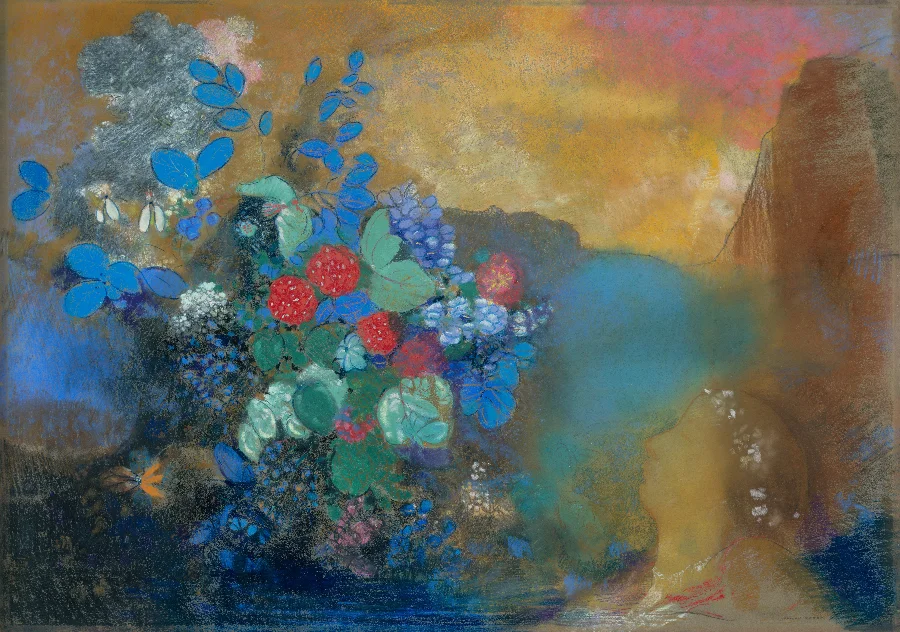
Joined close observation of nature to dream and invention. In his early black-and-white work there are floating eyes, hybrid creatures and plants that seem to have grown in somebody's mind.
Pierre Puvis de Chavannes
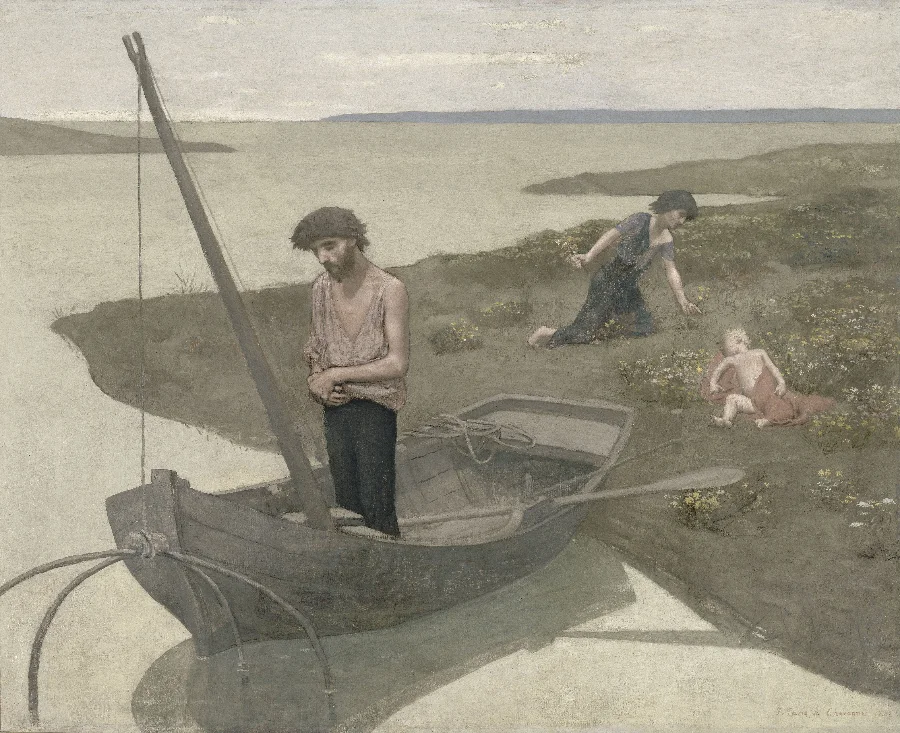
Used calm rhythms, muted colour and large simplified forms. His scenes feel like distant memories, or parables told without words.
Edvard Munch
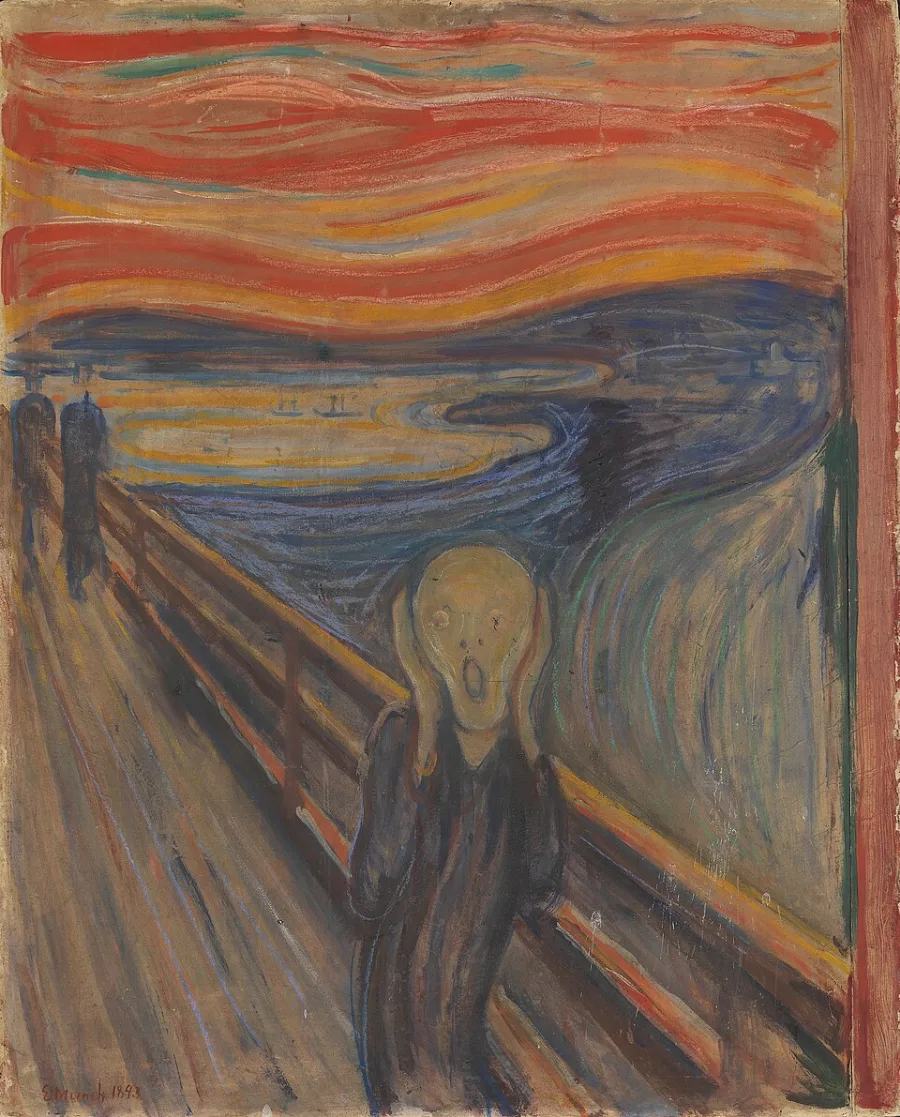
Turned landscape, colour and line into a language for powerful feeling. In his work the outside world seems to change shape under the pressure of anxiety, loneliness or longing.
Gustav Klimt
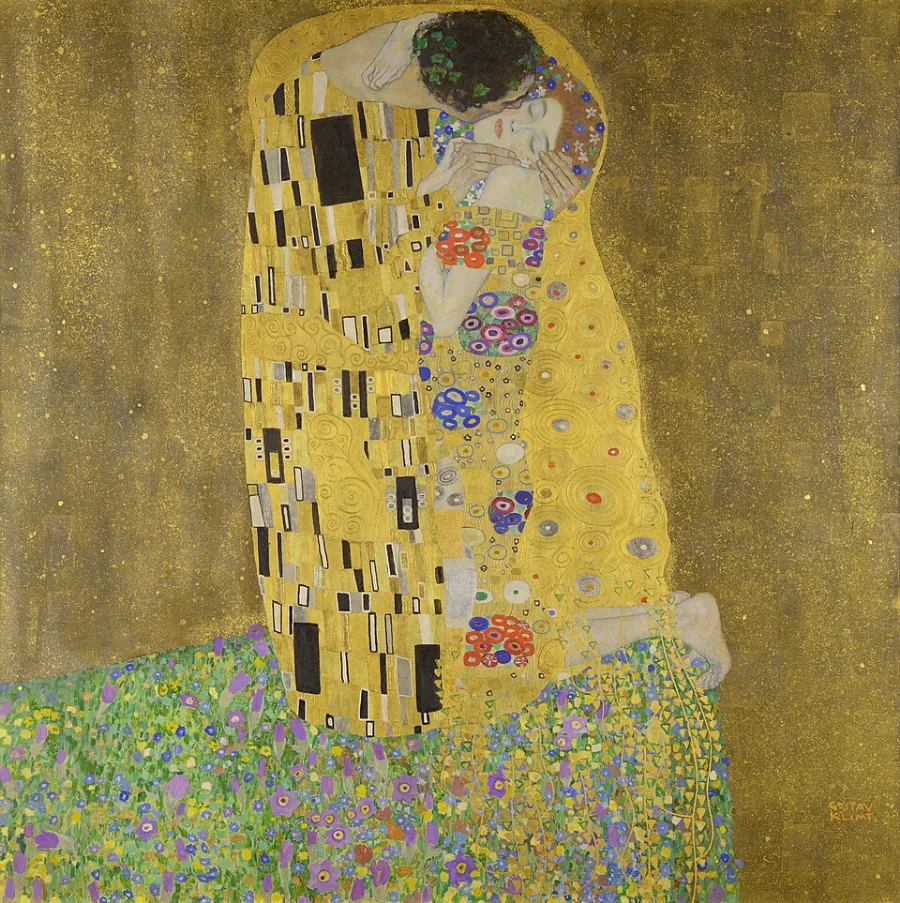
Set figures against golden decorated surfaces and pattern, so that a real body sits beside something almost abstract.
James Ensor
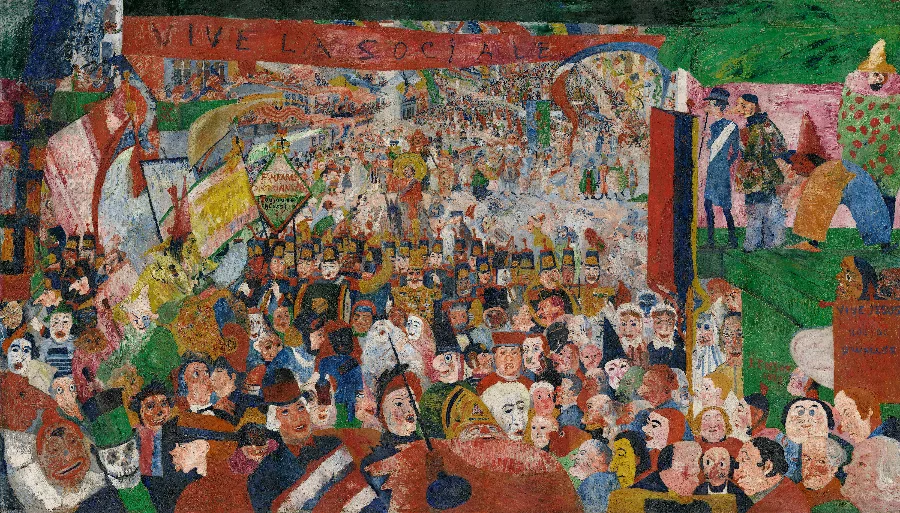
Filled his pictures with masks and grotesque figures. A familiar carnival object became a way to show the hidden, strange or frightening face of a society.
Fact card. Several of these painters belong to more than one movement at once. The history of art is not a cabinet with perfectly closing drawers.
Redon, and the visible invisible
Odilon Redon matters especially to this chapter. He took familiar natural forms and turned them into visions: an eye could become a balloon, a plant a creature, a face part of the night itself.
His work does not ask you to believe that fantastic beings literally exist. It shows something else: an imagined image can be a truthful account of an inner state.
We read shape and colour emotionally before we have worked out the subject. Round lines and matt blue feel calm; sharp lines and greenish-yellow light feel anxious — and that happens before you have identified a single object.
The symbol lab
Build your own Symbolist scene by choosing one thing from each group.
An impossible change
Something floats. A shadow lives on its own. A reflection looks the other way. A size changes unexpectedly. There is a sky inside an object.
Fact card. The formula: a feeling + a familiar image + one impossible change = the beginning of a Symbolist scene. For example — curiosity, a leaf, and a sky inside it: the capybara lifts a leaf and finds not earth beneath it but a whole constellation.
Creative workshop: a self-portrait with no face
Draw yourself without drawing what you look like.
- Choose three objects connected to your thoughts or your habits.
- Give each one an unusual colour, size or ability.
- Arrange them so the whole picture carries a single mood.
- Add a capybara as the watcher: lying, walking, swimming, hiding, or looking out of a reflection.
- Give it a title that does not explain the picture completely, and leaves something closed.
Worth knowing. If it comes out too easy to read, change one connection. Let the shadow fall the wrong way, or the reflection arrive late, or the flower close in daylight.
Four movements, four questions
Impressionism asked
What does this moment look like? — and caught the light and the passing impression. Our capybara moved through water full of glints.
Post-Impressionism asked
How do I turn an impression into my own language? — and strengthened form, colour and feeling. Our capybara sat still inside a whirlwind of brushmarks.
What to keep
“A closed flower can say more than an open one. A reflection can know more than a mirror. And a quiet capybara by the water can be a way into somewhere you cannot look at directly.”
1. What matters most to a Symbolist painter?
The question moved from what a thing looks like to what it does to you.
2. Does a symbol always have one fixed meaning?
Which is why this chapter says "in our scene" every time it offers a reading.
3. Which detail in our picture shows that a small feeling can change everything around it?
One small contact, and the whole surface of the water is different.
4. Why did some painters turn away from the visible world at the end of the 1800s?
Cities and science were racing ahead. Some artists went inward instead.
5. What is Odilon Redon best known for in this chapter?
An eye becomes a balloon; a plant becomes a creature. Observation, then transformation.
6. What did the Symbolists mean by using gold and pattern?
Flatness and ornament turned the real world into a place between picture and vision.